

#AIonPoint: Finding your Brand White Space: The Emotional Gap Insurance Brands Are Missing
Contents
Standing for what matters most to your consumers is a brand positioning fundamental, but it’s not always as easy as it sounds. Here we dive into that least trusted of categories – insurance. Showing how nuances matter and how AI personas deliver what marketing teams need to capitalise on category whitespace.
The U.S. insurance is a category that spends heavily to be liked and consistently fails to be loved. State Farm tells you it's a good neighbor. Allstate warns you about Mayhem. Lemonade promises to reinvent the whole thing. Between them, these brands collectively spend billions each year building characters, slogans, and emotional promises. Yet when you examine brand sentiment across the category, consumers describe their insurers in the same tired terms: fine, confused, or slightly suspicious.
The gap between what brands say and what customers feel is a research problem more than a creative one. It's also more commercially significant than most brand teams recognize. Virtual Audiences, Yabble's AI persona tool, builds bespoke AI personas specific to the research topic at hand, letting teams ask questions across distinct consumer segments at speed and surface what people think before a brief is written. To understand how U.S. insurance consumers really feel, we created a set of personas representing distinct segments of the American insurance market. Here's what they told us.
Insurance Has a Trust Problem
Insurance occupies a strange place in consumer life. People buy it as a necessity and they rarely think about it until something goes wrong. When something does go wrong, the experience tends to confirm their worst assumptions about the industry.
With U.S. consumer confidence hitting record lows in May 2026, consumers are scrutinising recurring costs more carefully. Insurance is hard to evaluate before purchasing which means trust does more commercial work than in almost any other category. Brands that feel transactional feel cuttable. Most brands in the category have settled for functional adequacy, and consumers feel it: they can describe their insurer's features clearly enough, but they struggle to describe how the insurer makes them feel.
We asked Robert, a Trust Seeker representing U.S. insurance consumers who are searching for a brand they can rely on, what came to mind first when he thought about his current provider:
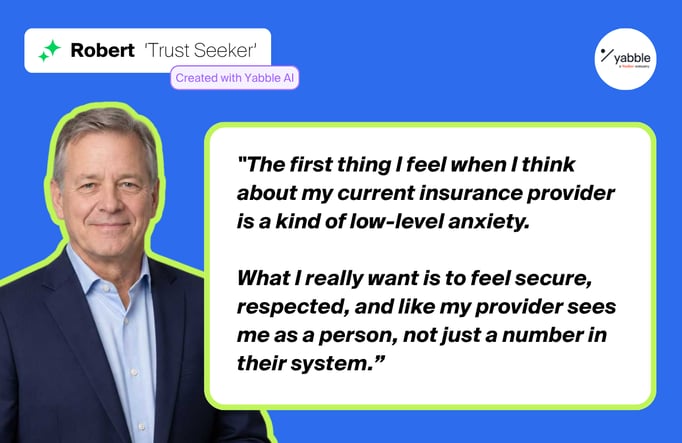
Robert isn't angry. He's describing emotional absence. His insurer delivers on paper but fails to land in the way it matters. This pattern held across every persona we built: consumers rarely described frustration. They described distance. Their insurers felt competent, but cold. The gap between what consumers get and what they wish they had is persistent and unaddressed.
Satisfied Customers Are Not the Same Thing as Loyal Ones
"Satisfied is 'I haven't switched yet.' That's a very different thing from a recommendation — and only one of them grows a brand."
Brand teams in insurance often point to satisfaction scores as evidence that things are working. Allstate carries an 85% satisfaction index. Its Net Promoter Score sits at 13.
85% satisfaction. 13 NPS. That gap is the problem.
Satisfied customers stay, but only passively. Inertia holds them, not attachment. This matters in a category where purchase decisions are shaped heavily by peer influence — consumers can't test a policy before they buy it, so they rely on what friends say. A brand earning passive approval hands future switchers to whoever works out how to create a real feeling first.
We put this directly to Jesse, a Skeptical Comparer representing consumers who shop carefully and stay guarded:
.png?width=662&height=430&name=Linda%20(2).png)
Jesse isn't dissatisfied. She's satisfied — but for her, satisfaction is a floor, not a foundation. She won't recommend without caveats, won't advocate without verification, and won't extend trust that hasn't been explicitly earned. That's passive retention described from the inside, and it's the dominant posture in the category.
The Gap Between Lemonade and State Farm Is Wide Open
The two most interesting brands in U.S. insurance right now aren't competing for the same territory. That's part of why neither has won.
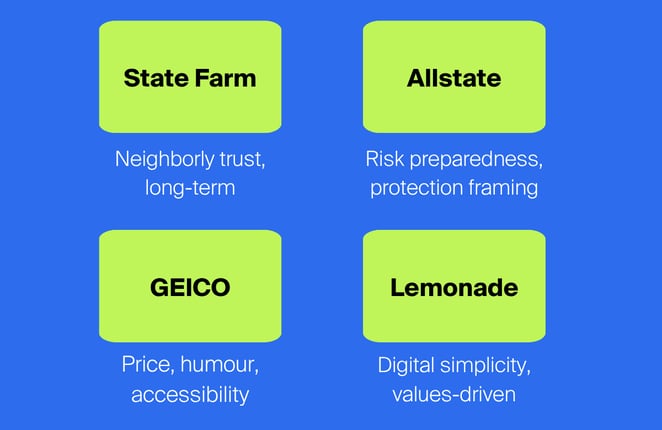
Lemonade has built something new: a digital-first, values-driven insurer that feels more like a consumer app than a legacy institution. Sign-up takes 90 seconds. The tone is human and occasionally funny. But Lemonade falls short on warmth, long-term trust, and the emotional reassurance consumers need when something has gone wrong. The brand feels modern before it feels safe.
State Farm sits at the other end. Customers feel heard and recognised. The brand deployed real goodwill during the pandemic through dividends and payment flexibility. But its digital layer is thinner than Lemonade's, and the tone can still feel more institutional than personal.
No major brand owns the territory between them: fast and warm, digital and human, modern and trustworthy.
That's the whitespace. And it's not a narrow niche — it's an open position at the centre of what insurance consumers say they want.
We asked Ava, a Digital Optimist representing younger, digitally native consumers who expect more from every brand they deal with, what an insurance brand would have to look and feel like to get her interested:
.png?width=662&height=430&name=Linda%20(3).png)
Ava is describing something that doesn't exist at scale in the category. She names Lemonade as the closest option while pointing to what it still lacks. Brand teams who read her response as a spec rather than a verdict will find a usable map.
Tyler, a Value Pragmatist representing the large share of U.S. consumers who want straightforward value and make practical decisions, was asked what would make him choose one brand over another if he were switching today:
.png?width=662&height=430&name=Linda%20(4).png)
Tyler can name what he wants and the brands that come closest — but he can't name one that delivers the full picture. Notice what's absent from his criteria: brand warmth, values, emotional connection. For a Value Pragmatist, trust is built through clarity, fairness, and no surprises. The whitespace here isn't about feeling cared for. It's about feeling respected. The brands closest to owning that position are still leaving the door open.
All of this insight unlocks opportunity
Tyler, Ava and the other AI personas can articulate the emotional gaps, the functional needs and their brand perceptions. This rich layer of insight is always available and allows marketing teams to explore unmet needs, test positioning territories, and pressure-test messaging across consumer segments in minutes. It fundamentally enhances insights before research budgets are committed and before strategic directions harden. It's the head start that makes deeper research sharper.
Explore how Virtual Audiences can help your team find whitespace and pressure-test positioning:
→ See how it works — a closer look at the methodology
→ Book a demo — for teams ready to explore a specific category or brief
Each post in #AIonPoint: Market Insights for Brands explores the trends and consumer behaviors shaping your industry. From retail and CPG to tech, we’re uncovering what truly drives markets, all powered by our synthetic data solution that’s fast, accurate, and always on point. Stay tuned for more insights and trends as Yabble AI decodes consumer behavior, helping brands thrive in an ever-changing landscape.
References:
1. Forbes — forbes.com
2. System1 Group — system1group.com / Nielsen — nielsen.com
3. The Harris Poll — theharrispoll.com
4. Emerald Publishing — emerald.com
5. Fast Company — fastcompany.com
6. eReleases — ereleases.com
7. CMSWire — cmswire.com
8. PNAS — pnas.org
9. GlobalEdge / MSU — globaledge.msu.edu